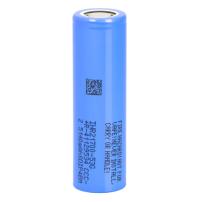
Batteries are sources of direct current that accumulate and store energy. The lion's share of batteries relies on the principles of cyclic conversion of chemical energy into electrical energy, which allows them to be charged and discharged repeatedly. What types of batteries are there, what are their good and bad points? Let's try to figure it out.
There are a large number of types of batteries on the market. They differ from each other in their structure and the nature of the chemical processes that occur inside. In light of power supply interruptions and the high demand for batteries for deploying autonomous power systems, within the framework of the material we will consider the most popular types of batteries: automotive, for uninterruptible power supplies and autonomous complexes based on solar panels or wind generators. These types of batteries are most similar to each other.
Lead-acid (SLA)
The lead-acid type is the oldest among other common types of batteries. The technology was invented by the French physicist Gaston Plante back in 1859. Lead-acid batteries are attractive due to their versatility and relatively affordable cost. They are used in various types of vehicles, autonomous or backup power supply systems, etc.
Constructively, this type of battery is built in a plastic case and consists of lead plates immersed in an electrolyte (an aqueous solution based on sulfuric acid). The principle of operation of the battery is to convert chemical energy into electrical energy during discharge and vice versa - electrical energy into chemical energy during charging. It should be noted that during discharge, a coating of lead sulfate forms on the plates. And the more the battery is discharged, the thicker the layer of deposits will be. As a result, the battery voltage drops. During battery charging, a desulfation process occurs, but in practice, the electrode plates are not completely cleaned and lead-acid batteries eventually lose their initial capacity.
Lead-acid batteries have low self-discharge, boast the absence of a "memory effect" and maintain their performance in a wide temperature range. At the same time, the less charge in such batteries, the less current they produce. Also, lead-acid batteries are afraid of deep discharges, take a long time to charge, have large dimensions and weight. Models of the serviceable design also emit harmful fumes, which does not allow them to be operated indoors.
Main advantages:
High reliability
Low self-discharge
No "memory effect"
Wide operating temperature range
Affordable cost
Main disadvantages:
200–500 charge/discharge cycles
Afraid of deep discharges
Emission of harmful vapors
Long charging time
Heavy weight
Lead-acid (EFB)
Many of the shortcomings of the original lead-acid batteries have been corrected in EFB batteries (Enhanced Flooded Battery - an improved battery with liquid electrolyte). In the “insides” of such batteries, thick lead plates without any impurities are installed, and the plate with a positive charge is in a microfiber envelope filled with liquid electrolyte. Microfiber packages prevent the active mass from falling off and significantly slow down the process of sulfation of the plates during deep discharges of the battery. As a result, high current output performance is ensured and the risk of short circuits is prevented.
Due to the use of thickened plates, EFB batteries need more time to replenish energy reserves. They must be charged with appropriate devices, scrupulously controlling the voltage, otherwise the electrolyte may boil and evaporate. In all other points of the program, improved lead-acid batteries have only a number of advantages: they are resistant to deep discharges, maintain high performance in a wide range of temperatures and demonstrate a low level of self-discharge. EFB batteries are more expensive than original lead-acid ones.
Main advantages:
High reliability
Resistance to deep discharges
Productive operation at high and low temperatures
Low self-discharge
Main disadvantages:
300-700 charge/discharge cycles
Emission of harmful vapors
Long charging time
Heavy weight
Expensive
Gel (GEL)
Gel batteries are an even more advanced type of lead-acid batteries with a special thickener in the composition, which brings the electrolyte to a jelly-like state. Gel electrolyte provides maximum contact with the negative and positive plates, while maintaining a uniform consistency throughout the volume. Gel batteries are manufactured in a sealed case, they do not emit any harmful substances during operation and do not require maintenance.
Gel batteriesB are attractive due to their high reliability, environmental friendliness, low self-discharge, and long service life. At the same time, they are not the best suited for buffer operation — standing on standby for a long time to support power supply in a short-term backup mode. It makes sense to purchase such batteries for a UPS when the “uninterruptible power supply” has to be turned on almost every day — for example, for unstable networks with constant and long-term power outages.
Main advantages:
500-1000 charge/discharge cycles
High reliability
Resistance to deep discharges
Low self-discharge rate
No maintenance required
Long service life
Main disadvantages:
Sensitivity to charge quality
Sensitivity to short circuits
Afraid of low temperatures
Absorbed electrolyte (AGM)
The electrolyte in AGM (Absorbed Glass Mat) batteries is absorbed by porous fibers to give it a jelly-like structure. Such batteries are manufactured in sealed cases and have reduced electrical resistance, which allows them to deliver significant currents for short periods of time. Batteries AGMs are suitable for starting power units in cars and are often used in power supply backup systems.
The competitive advantages of AGM batteries include a long service life, low maintenance and overall cost, high energy density, and resistance to shock and vibration. However, AGM batteries do not tolerate overcharging well, are sensitive to low temperatures, and are heavy.
Main advantages:
Can deliver high currents in a short time
Tolerance to deep discharges
Low self-discharge rate
Fast charging
Sealed housing
Resistance to shaking and vibrations
Main disadvantages:
400-800 charge/discharge cycles
Poor tolerance to overcharging
Sensitivity to low temperatures
Heavy weight
Expensive
Lithium-ion (Li-Ion)
Lithium-ion Li-Ion batteries are used everywhere in modern realities. They have become widespread in household appliances and mobile gadgets, and have found themselves as power sources in electric vehicles and energy storage devices. Such batteries consist of a positive anode on copper foil and a negative cathode on aluminum foil. The charge and discharge in Li-Ion batteries are associated with the transfer of lithium ions between the electrodes.
Li-Ion batteries have the highest capacity to body size ratio, which makes it possible to manufacture powerful batteries with minimal dimensions and weight. This type of battery is used in devices with high energy consumption or when it is necessary to ensure maximum battery life.
Batteries of this type have a large reserve of charge/discharge cycles, support an accelerated charging procedure, are characterized by a complete absence of the "memory effect" and low self-discharge. The downside of Li-Ion batteries is high fire hazard, a tendency to degrade over time, and sensitivity to low temperatures. The charging process of lithium-ion batteries is monitored by a special BMS board that controls charging and discharging, analyzes the condition of components, measures temperature, voltage and resistance, and balances currents between battery components.
Main advantages:
500-1500 charge/discharge cycles
High capacity with compact dimensions
Large reserve in charge/discharge cycles
Fast charging
Low self-discharge rate
Complete absence of memory effect
Main disadvantages:
Fire hazard
Rapid loss of capacity at low temperatures
Electronic protection circuit required
Tendency to "aging"
Lithium-polymer (Li-Pol)
The main difference between Li-Pol batteries and Li-Ion batteries is the type of electrolyte used. In lithium-polymer batteries, its role is performed by a special polymer with conductive additives. The structure of the electrolyte can be different: dry, homogeneous in the form of a gel or with a fine-pored polymer matrix. Li-Pol batteries can take on flexible shapes and are often produced in a soft shell instead of a hard case.
The positive and negative qualities of lithium-polymer batteries are identical to the Li-Ion type. With the difference that such batteries can be given absolutely any shape. They are distinguished by their elegance and thin shapes, but they are more expensive than lithium-ion ones.
Main advantages:
300-1000 charge/discharge cycles
High specific capacity and energy density
Voltage stability during discharge
Fast charging
Low self-discharge
Complete absence of "memory effect"
Compact size and light weight
Variability of shapes
Main disadvantages:
Fire hazard
Rapid loss of capacity at low temperaturestemperatures
Electronic protection circuit required
Degradation during long-term storage
Lithium iron phosphate (LiFePO4)
Lithium iron phosphate LiFePO4 batteries are considered the best in terms of overall parameters for mass consumers. Only lithium titanate batteries are a head above them, but they are an order of magnitude more expensive. Lithium ferrophosphate is used as the cathode material for LiFePO4. The main advantages of this type of battery are a large number of charge/discharge cycles (over 2000), chemical and thermal stability, the ability to work without problems in the cold, shorter charging time (especially with high currents) and increased safety of operation.
LiFePO4 batteries are the most progressive today.
The control and management of these batteries relies on a BMS board, which guarantees safe voltage and current limits. LiFePO4 batteries have the lowest probability of thermal acceleration and ignition. Their operating voltage is reduced. However, this also has its advantages: it leads to lower internal resistance and increased charge/discharge speed. The only thing that such batteries are afraid of is the direct effect of moisture - when interacting with water, active lithium is lost and energy density decreases. LiFePO4 batteries are also larger in size compared to lithium "classmates" (by approximately 30%), and they cannot be charged at negative temperatures. Such batteries are rarely used as starting batteries for cars, since the BMS control board, sharpened for high starting currents, is very expensive.
Main advantages:
2000-5000 charge/discharge cycles
Immunity to deep discharges
Voltage stability
Fast charging with high currents
No pronounced "memory effect"
Wide operating temperature range
Durability
High safety
Main disadvantages:
Low nominal voltage
Sensitivity to direct moisture exposure
Cannot be charged at negative temperatures
Larger dimensions compared to lithium batteries
Conclusion
To make the right choice in favor of energy storage devices, it is necessary to correctly prioritize and take into account the features of the further use of batteries. Choosing a battery type is not such a difficult task if you approach the issue wisely and weigh all the pros and cons for each common technology.