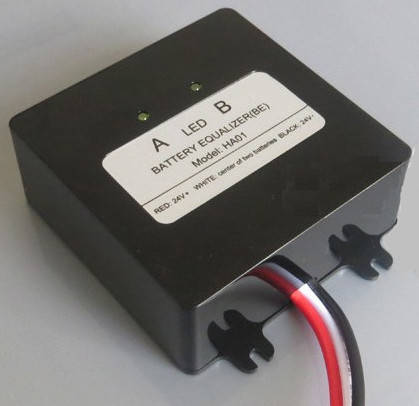
Balancer for batteries
Features:
- Model Balancer GreenChip B800
- The number of channels - 8
- the default balancing voltage - 14.5 V on the battery
- triggering voltage adjustment range - 12.5 - 17 V on the battery
- The mean point (balancing start) - 50 mV
- balancing current - 0.7 A
- The level of rejection (including anxiety) - 50 mV
- Terminals - Output 2h1.5 mm2
- Dimensions - 70 x 160 x 27 mm
- Operating temperature from -30 ° C to +50 ° C
- Weight - 1kg
Переглянути відгуки (0)


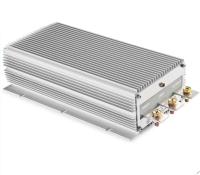


The balance for batteries equalizes the state of charge of the eight series-connected batteries or more parallel strings of series-connected batteries.
Why is it necessary to use a charger with balancing?
Differences performance battery cells lead to the fact that the batteries are working in different ways, and as a result the total capacity of the battery component is lower than that of its constituent cells. In addition, the resource of the battery is also lower because it is determined by the "weak" battery that will wear out faster than others.
It is therefore necessary balancing of the battery cells.
The main modern way of balancing - it is pumping charge from one cell to another, as far as possible with minimal losses. Modern circuit design is easy to implement such opportunities.
Microprocessor balancer for batteries continuously monitors cell voltage and gradually align them throughout the charging process. For cell charged more than others, balance weight for lead-acid batteries 8-Channel is connected in parallel a resistor (50-80 ohm), passes through a part of the charging current, and only slightly slowing the charge of the cell without stopping it completely.
In the chip the modern balancer for batteries using an improved version of balancing based on the voltage change. To minimize internal resistance spread effect balancing is carried out towards the end of the charge process when the charge current value is small.