
Gasoline engine for DLE 111CC aircraft model
| Count | Price | |||
|---|---|---|---|---|
| From | 1 | шт | 72000 | грн |
| From | 2 | шт | 70560 | грн |
| From | 6 | шт | 69120 | грн |
| From | 16 | шт | 68400 | грн |
| From | 43 | шт | 67680 | грн |
| Count | Price | |||
|---|---|---|---|---|
| From | 1 | шт | 72000 | грн |
| From | 2 | шт | 70560 | грн |
| From | 6 | шт | 69120 | грн |
| From | 16 | шт | 68400 | грн |
| From | 43 | шт | 67680 | грн |

Characteristics: DLE170 petrol engine 170CC
| Count | Price | |||
|---|---|---|---|---|
| From | 1 | шт | 87000 | грн |
| From | 2 | шт | 85260 | грн |
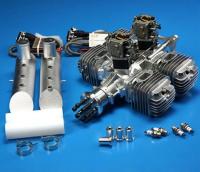
Product details: DLE 220CC DLE222 4-cylinder petrol engine
| Count | Price | |||
|---|---|---|---|---|
| From | 1 | шт | 126000 | грн |
| From | 2 | шт | 123480 | грн |
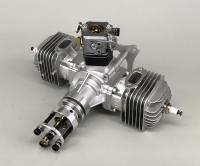
Specifications

| Count | Price | |||
|---|---|---|---|---|
| From | 1 | шт | 33360 | грн |
| From | 2 | шт | 32693 | грн |
| From | 6 | шт | 32026 | грн |

| Count | Price | |||
|---|---|---|---|---|
| From | 1 | шт | 18600 | грн |
| From | 2 | шт | 18228 | грн |
| From | 6 | шт | 17856 | грн |
| From | 16 | шт | 17670 | грн |
| From | 42 | шт | 17484 | грн |

Product details: DLE200 200CC engine
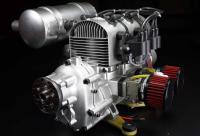
Options
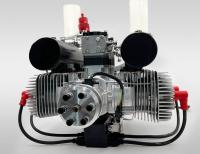
Characteristics:
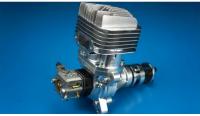
DLE DLE55RA Gasoline Engine with Rear Exhaust
Specifications:
Internal combustion engine for models is a power plant that drives model airplanes, helicopters, cars, etc. Until recently, internal combustion engines were the most widespread in modeling. During the evolution of aircraft modeling, microliter carburetor gasoline engines with spark ignition, compression and spark plug ignition engines were used for airplanes (and other models), the working volume of which, mainly, reached 0.8–15 cm³. Among them, two-stroke and four-stroke engines are distinguished. Gasoline engines with spark ignition Airplane model gasoline engine of the 1930s
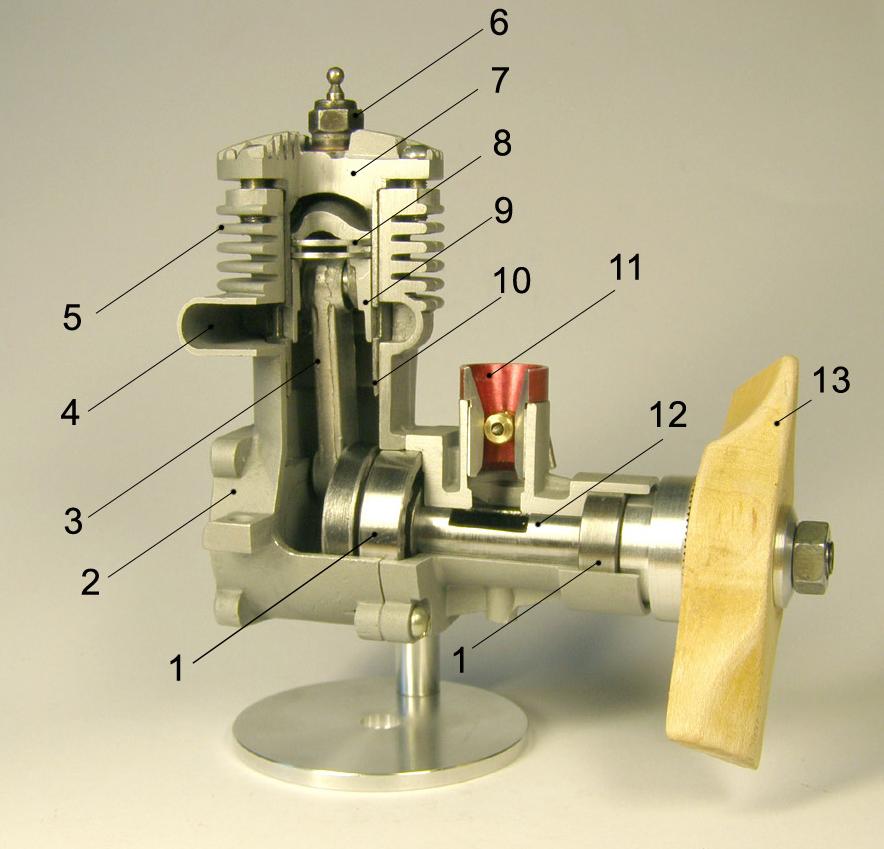
Construction of a methanol engine:
Gasoline engines with spark ignition The first engines for serially produced models appeared in the 1930s in the USA, England, and Germany. These were two-stroke engines that had a spark ignition system and ran on a mixture of gasoline and engine oil. The ignition system included a contact breaker, an induction coil, a capacitor, a battery, and a spark plug. Such engines had a working volume of 5-10 cm³. They were the main type of engine in modeling until the end of the 1940s. A significant disadvantage of such engines was a bulky and rather heavy ignition system, which was especially problematic when used on aircraft models. Gasoline engines were later supplanted by methanol engines with glow plug ignition. For the second time, gasoline engines gained some popularity in the mid-2000s. True, these are already engines of a much larger volume (20-150 cm³), which are installed on large models of airplanes, cars, and racing boats. Modern gasoline engines are designed with modern technologies in mind and are equipped with a relatively light, reliable electronic spark ignition system.
Engines with glow plug ignition (methanol) American amateur, model engine designer Ray Arden, in 1947 invented a compact spark plug with a glow spiral. By experimenting with the fuel and ignition elements of the working mixture, he achieved stable operation of the engine on methanol (methyl alcohol), which was ignited by a glow plug. Such engines have become very popular, they do not require an ignition system on board the model, but only a small glow plug. Glow plug ignition engines run on fuel consisting of a mixture of methanol and castor or synthetic oil. Nitromethane is used as an additive that increases engine power. In the middle of the catalytic glow plug is a spiral made of platinum-iridium alloy, which, when heated, catalytically ignites the combustible mixture. There are also ordinary glow plugs that do not use catalysis. When starting the engine, an electric battery (voltage 1.2 V) is connected to the spark plug, which heats the spiral and ignites the combustible mixture. When the engine has started, the voltage is turned off, and then the working temperature of the coil is maintained by the high temperature of the combustion products. The fuel-air mixture is prepared in a carburetor of a simple design. For radio-controlled models, the engines are equipped with a more complex carburetor, which provides adjustment of shaft revolutions. Two-stroke and four-stroke engines are used in modeling. Four-stroke engines provide greater fuel efficiency (power output relative to fuel consumption), but produce less power than two-stroke engines of the same displacement, and have a more complex design. Single-cylinder two-stroke engines are most common. There are also opposed two-cylinder, radial, and specific rotary Wankel motors. All modern engines are equipped with mufflers.
Compression engines A compression engine is a type of piston two-stroke internal combustion engine in which the ignition of the fuel-air mixture is caused by the high temperature from its compression (compression). In many countries, such engines are still called diesel, although this is not entirely true. 1.5cc compression engine. Fuel for compression engines is a mixture of diethyl (medical) ether, kerosene (lighting kerosene), castor (castor) oil and mineral engine oil. Ether is the main igniting component of fuel. The degree of compression is regulated by a counter piston - a movable piston located in the cylinder head, which changes the volume of the combustion chamber. The counter-piston is moved by a screw located in the upper part of the cylinder cooling radiator. A high degree of compression is achieved by high precision manufacturing of mutually ground cylinder liners (hardened steel) and cast iron pistons. The maximum engine revolutions are regulated by selecting the compression ratio and fuel supply (carburetor needle). In compression model engines, the carburetor has a simple design, consisting of a diffuser and a nozzle with a threaded needle for adjusting the fuel supply. Changing the revolutions with a controlled carburetor (with an air damper) is ineffective. Almost all engines are silencedwere not equipped with Compression engines appeared in mass production in the 1950s in Germany, the USA, and England. They had a small working volume, in the range of 1.5-4 cm³. The 1.5 and 2.5 cm³ classes became the most common. Today, compression engines have lost their relevance, and are used only in some classes of models and by individual amateurs. In the USSR, such engines were very common in technical circles, mainly because teenagers were forbidden to use methanol fuel due to its poisonous properties. From 1962 to the 1980s, the Kyiv DOSAAF plant produced the popular "Rhythm" engine with a volume of 2.5 cm³, "Vetyerok" with a volume of 1.5 cm³; at other enterprises of the Ukrainian SSR, engines "Kharkov-2.5", "Sokol-2.5", "EURIKA" and a number of methanol engines. Today, there are small companies in Kharkiv that serially manufacture high-class compression engines for sports modeling.
Lubrication system of model engines Engines for models do not have a special lubrication system. Lubrication of moving parts is performed with oil dissolved in fuel. The fuel mixture passing through the crankcase is partially stratified, and the oil in the form of drops settles on the engine parts. About 3-10% of mineral or synthetic oil is added to gasoline fuel (A-95 gasoline); about 15-20% castor or synthetic oil in methanol; in diesel 25-33% mixture of castor and mineral oil.
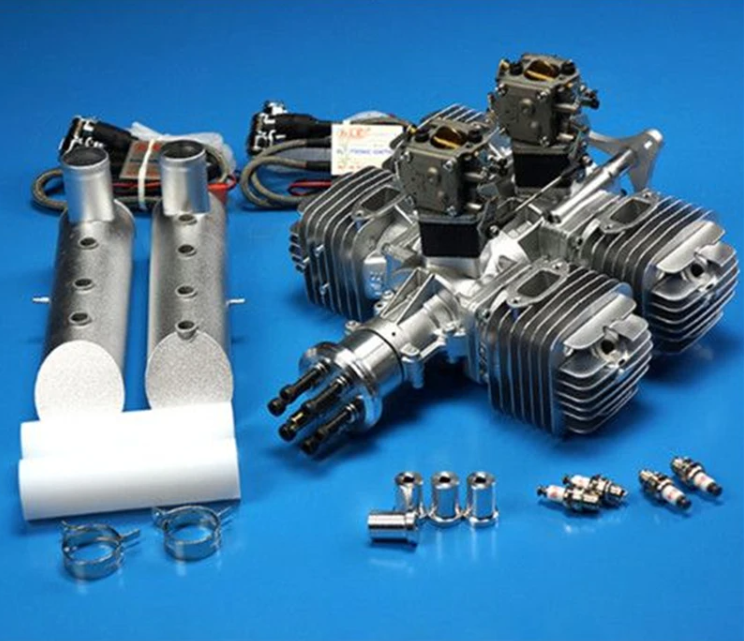
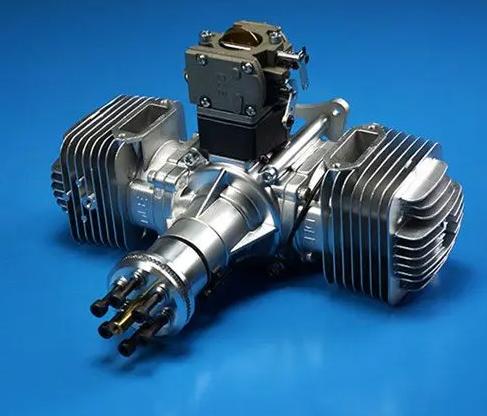
Application In addition to the usual engines for model airplanes, there are their modifications or special developments for installation on other models. In general, they have a similar design, but differ in power, carburetor design, muffler type, cooling method. Among them there are engines with standard technical parameters, intended for amateurs, and special powerful, much more expensive engines for sports competitions. Airplane model engines for model helicopters, which operate with forced cooling from a fan, are equipped with a cylinder head with a larger area of cooling fins. In model ship engines, the cylinder head has a special design through which water (from overboard) passes to cool the engine. To ensure the stability of its operation, a flywheel is installed on the output shaft. Engines for car models work under conditions of significant loads, they are more massive, equipped with a special carburetor and a cylinder head with a large area of cooling fins.