Battery Management System (BMS)
In recent years, so-called "intelligent" batteries, or in other words Smart batteries, have become popular. Batteries of this group are equipped with a microprocessor that can not only provide data exchange with the charger, but also regulate the operation of the batteries, inform the user about their level of performance. Batteries equipped with a specialized intelligent control system are widely used in a variety of technical electrical equipment, including electric transport. It is noteworthy that the group of intelligent batteries is mainly formed by lithium-containing batteries, although sealed or ventilated lead-acid, nickel-cadmium batteries are also found among them.
Smart batteries are at least 25% more expensive than conventional batteries. However, intelligent batteries differ not only in price, as most assume, but also in the features of the control device supplied with them. The latter ensures identification of the battery type with the charger, monitors the temperature, voltage, current, and charge level of the batteries. A significant part of lithium-ion battery modules have a built-in monitoring and management system (BMS), which is responsible for the state of the batteries and controls them in such a way as to maximally preserve the operability of the batteries under various conditions.
Let's consider in more detail what a battery with a BMS is. Smart batteries are batteries equipped with a special microcircuit in which constant and temporary data are programmed. Constant data is programmed at the manufacturer's plant and is not subject to change: data related to the BMS production series, its marking, compatibility with the type of batteries, voltage, maximum and minimum voltage limits, temperature limits. Temporary data is data subject to periodic updating. These include mainly operational requirements and user data. As a rule, it is possible to connect the control and balancing system to a computer or controller in order to monitor the state of the batteries and control their parameters. Some BMS models can be configured for different types of batteries (their voltage levels, current values, capacity).
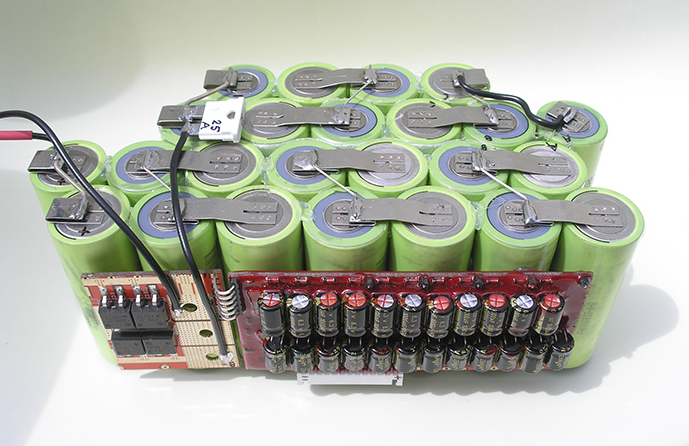
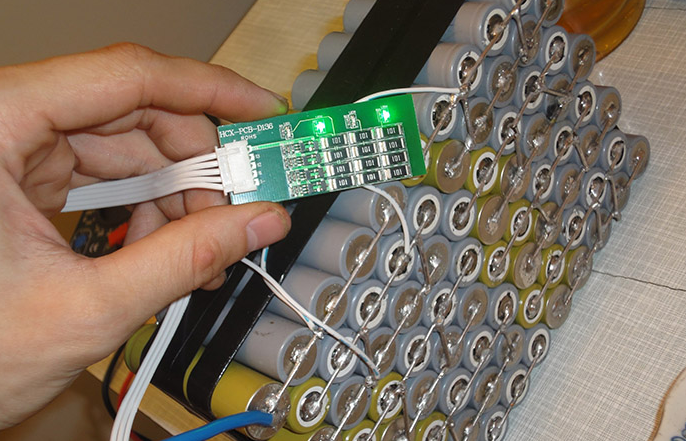
Battery Management System (BMS) is an electronic system that controls the charge/discharge process of the battery, is responsible for the safety of its operation, monitors the battery condition, and evaluates secondary performance data.
BMS (Battery Management System) is an electronic board that is installed on the battery in order to control the process of its charge/discharge, monitor the state of the battery and its elements, control the temperature, the number of charge/discharge cycles, and protect the components of the battery. The control and balancing system provides individual control of voltage and resistance of each battery element, distributes currents between the components of the battery during the charging process, controls the discharge current, determines the loss of capacity due to imbalance, and ensures safe connection/disconnection of the load.
Based on the data received, the BMS balances the charge of the cells, protects the battery from short circuits, current overload, overcharge, overdischarge (high and excessively low voltage of each cell), overheating and overcooling. The functionality of the BMS allows not only to improve the operating mode of batteries, but also to maximize their service life. When determining a critical battery condition, the Battery Management System reacts accordingly, prohibiting the use of the battery in the electrical system - it disconnects it. Some BMS models provide the ability to maintain a register (record data) on the operation of the battery and then transfer it to a computer.
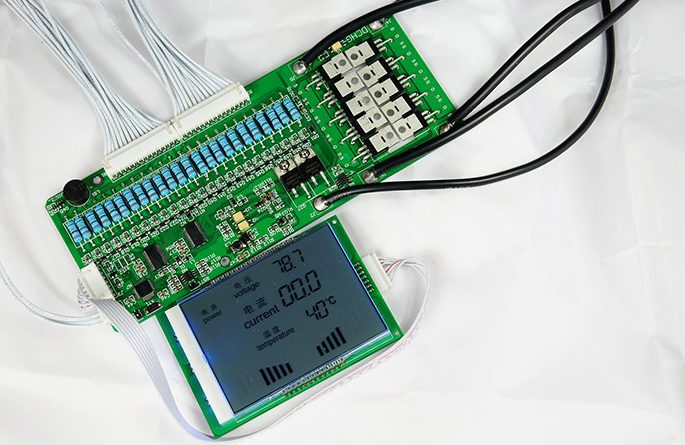
Lithium iron phosphate batteries (known as LiFePO4), which are significantly superior to a number of other lithium-ion batteries in terms of safety, stability and performance, are also equipped with BMS control circuits. The fact is that lithium iron phosphate batteries are sensitive to overcharging, as well as discharging below a certain voltage. In order to reduce the risk of damage to individual battery cells and failure of the battery as a whole, all LiFePO4 batteries are equipped with a special electronic balancing circuit - a battery management system (BMS).
The voltage on each of the cells combined into a lithium iron phosphate battery must be within certain limits and be equal to each other. The situation is such that ideally equal capacity of all cells included in a single battery is a rare occurrence. Even a small difference of a couple of fractionsy ampere-hours can cause a difference in voltage level during the charging/discharging process. The difference in the charge/discharge level of the cells of a single LiFePO4 battery is quite dangerous, as it can destroy the battery.
When cells are connected in parallel, the voltage on each of them will be approximately equal: more charged elements will be able to pull out less charged ones. When connected in series, there is no uniform distribution of charge between the cells, as a result of which some elements remain undercharged, while others are overcharged. And even if the total voltage at the end of the charging process is close to ideal, due to even a small overcharge of some cells, irreversible destructive processes will occur in the battery. The battery will not give the required capacity during operation, and due to the uneven distribution of charge, it will quickly become unusable. The cells with the lowest charge level will become a kind of "weak point" of the battery: they will quickly succumb to discharge, while the battery cells with a higher capacity will only undergo a partial discharge cycle.
The balancing method allows you to avoid negative destructive processes in the battery. The BMS cell management and balancing system ensures that all cells receive equal voltage at the end of charging. When the charging process is approaching the end, the BMS balances by shunting the charged cells or transfers the energy of the cells with a higher voltage to the cells with a lower voltage. Unlike active balancing, with passive balancing, the cells that have almost completely replenished the charge receive less current or are excluded from the charging process until all battery cells have an equal voltage level. The battery management system (BMS), performing balancing, as well as providing temperature control and performing a number of other functions, maximally extends the service life of the battery.
Usually stores sell ready-made battery assemblies with BMS, but some stores and companies still provide the opportunity to purchase battery components separately. Among them is the company "Electra". Electra is the first company in Ukraine that decided to supply and create a market for battery cells for self-assembly and design of lithium-iron-phosphate batteries (LiFePO4) in our country. The main advantage of self-assembly of batteries from individual cells is the ability to obtain a battery assembly kit that is as close as possible to the user's needs in terms of operating parameters and capacity. When purchasing components for assembling a LiFePO4 battery, it is important to pay attention not only to the correspondence of the battery cells to each other, but also to look at the BMS parameters: voltage, discharge current, the number of cells for which it is designed. The operation of a lithium-iron-phosphate battery also involves the use of only a charger that matches it by type. Its voltage should be equal to the total voltage of the battery.
The main purposes of using a BMS (Battery Management System) as a battery regulator:
- protecting battery cells and the entire battery from damage;
- increasing the battery life;
- maintaining the battery in a condition in which it will be possible to perform all the tasks assigned to it.
BMS (Battery Management System) Functions
1. Monitoring the state of battery cells in terms of:
voltage: total voltage, voltage of individual cells, minimum and maximum cell voltage;
temperature: average temperature, electrolyte temperature, outlet temperature, temperature of individual battery "cells", BMS board (the electronic board is usually equipped with both internal temperature sensors that monitor the temperature of the regulator itself, and external ones that are used to monitor the temperature of specific battery cells);
charge and depth of discharge;
charge/discharge currents;
health
The cell control and balancing system can store in its memory such parameters as the number of charge/discharge cycles, maximum and minimum cell voltage, maximum and minimum charge and discharge current values. It is this data that allows determining the health of the battery.
Incorrect charging is one of the most common reasons for battery failure, so charge control is one of the main functions of the BMS microcontroller.
2. Intelligent computing. Based on the above points, the BMS evaluates:
maximum permissible charge current;
maximum permissible discharge current;
the amount of energy, postaquired as a result of charging, or lost during discharge;
internal resistance of the cell;
total operating time of the battery during operation (total number of operating cycles).
3. Communication. BMS can supply the above data to external control devices via wired or wireless communication.
4. Protective. BMS protects the battery, preventing it from going beyond the safe operating limits. BMS ensures safe connection/disconnection of the load, flexible load control, protects the battery from:
overcurrent;
overvoltage (during charging);
voltage drop below the permissible level (during discharge);
overheating;
overcooling;
current leakage.
BMS can prevent a process that is dangerous for the battery by directly influencing it or sending a corresponding signal to the control device (controller) about the impossibility of further use of the battery. The intelligent monitoring system (BMS) disconnects the battery from the load or charger if at least one of the operating parameters goes beyond the permissible range.
5. Balancing. Balancing is a method of evenly distributing the charge between all the cells of the battery, thereby maximizing the battery life.
BMS prevents excessive overcharging, undercharging and uneven discharge in individual battery cells:
"shuffling" energy from the most charged cells to the less charged ones (active balancing);
reducing the current flow to a nearly fully charged cell to a sufficiently low level, while the less charged battery cells continue to receive normal charging current (shunting principle),
ensuring the modular charging process;
- regulating the output currents of the battery cells connected to the electrical device.
In order to protect the BMS board from the negative effects of moisture and dust, it is covered with a special epoxy sealant.
Batteries do not always have only one control and balancing system. Sometimes, instead of one BMS board connected via output wires to the battery and controller, several interconnected control electronic boards are used at once, each of which controls a certain number of cells and supplies output data to a single controller.
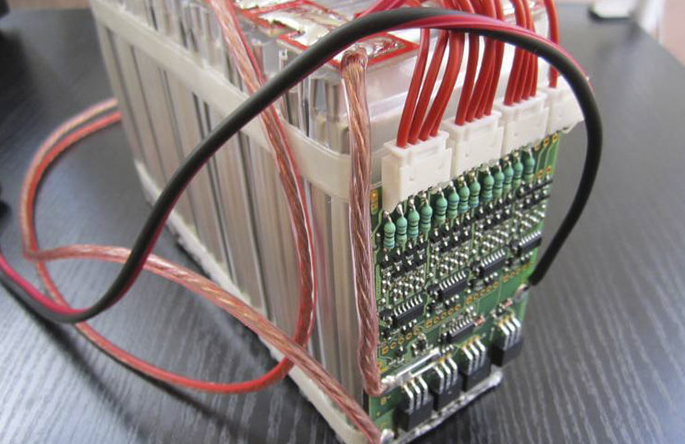
From a practical point of view, BMS can perform significantly more functions than just managing the battery. Sometimes this electronic system can participate in monitoring the parameters of the electric vehicle operating mode and perform appropriate actions to control its electric power. If the battery is involved in the operation of the energy recovery system during braking of the electric vehicle, the BMS can also regulate the process of recharging the battery during deceleration and descents.


